Annecy: The Alps' Canal Town
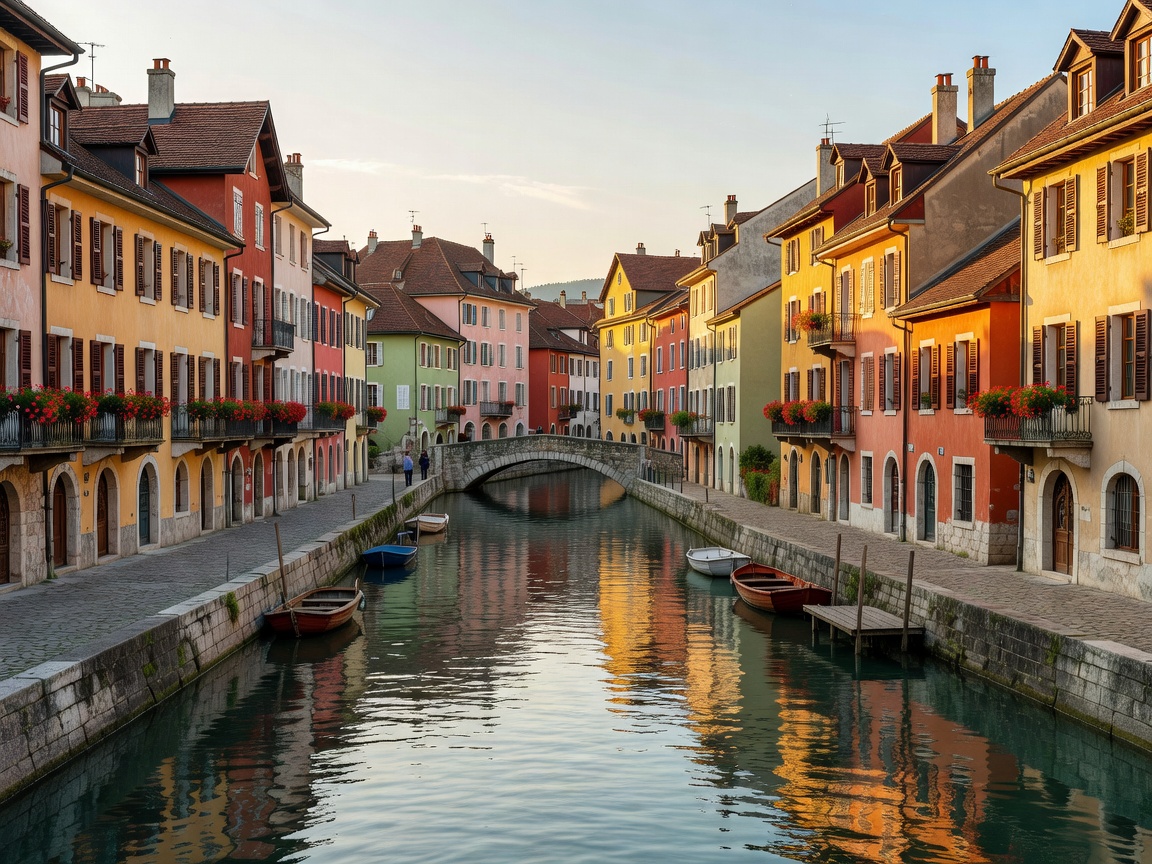
Annecy sits at the northern tip of a lake of the same name, framed by the foothills of the French Alps, and its old town is threaded with canals that have earned it comparisons to Venice — a fair description of the atmosphere, if not the scale. The Thiou canal runs directly through the historic centre, past the Palais de l'Isle, a former prison built on a small island in the middle of the waterway. The lake itself is known for notably clear water, and a paved cycling and walking path circles much of its perimeter, making it easy to spend a full day outdoors without a car.
Gordes: A Village Carved Into the Hillside
Gordes sits in the Luberon, in Provence, built into a steep hillside in a way that makes the village visible as a single mass of pale stone from the valley road below — one of the more striking approaches to any village in France. Its streets are narrow and largely pedestrian, climbing in tiers toward a château at the summit. Nearby, the Abbaye Notre-Dame de Sénanque, a still-active Cistercian abbey, is known for the lavender fields that surround it, which bloom for a limited window each summer and draw significant numbers of visitors during that period specifically for photographs of the abbey against the purple rows.
Gordes has no train station, and public transport into the Luberon generally is limited, so most visitors arrive by car, either as part of a self-driven Provence itinerary or a day trip from Avignon.
Étretat: Normandy's Chalk Cliffs
Étretat sits on the Normandy coast, known for a series of natural chalk arches and a freestanding needle of rock rising from the sea, formations shaped by centuries of erosion. The clifftop walking paths on either side of the town give views back toward the arches from above, and the paths are accessible without technical hiking experience, though they do involve sustained inclines and can be exposed to wind. The town itself is small, with a pebble beach and a handful of streets built up around 19th-century tourism, when the area first became popular with artists drawn to the cliffs' dramatic light.
How to Approach a Trip to All Three
Geography Matters
Annecy (Alps), Gordes (Provence) and Étretat (Normandy) are in three separate regions of France, not clustered together — visiting all three in one trip means treating them as separate legs rather than a single route.
Pairing With a City
Annecy pairs naturally with a Lyon or Geneva-based trip; Gordes pairs with a Provence itinerary including Avignon; Étretat pairs with a Normandy coastal trip, often combined with Le Havre or Rouen.
Car vs No Car
Annecy and Étretat are both reachable by train with limited onward local transport; Gordes and the wider Luberon are considerably easier with a car, given the lack of rail access to the village itself.
Timing
Gordes and the Sénanque lavender fields peak in a narrow summer window; Annecy's lake activities suit late spring through early autumn; Étretat's cliff walks are viable most of the year but most comfortable outside the winter storm season.
Managing Crowds at Popular Viewpoints
All three locations have a small number of well-known viewpoints — the Palais de l'Isle in Annecy, the valley overlook of Gordes, and the cliff paths above Étretat's arches — that draw the bulk of visitor traffic and photography. Arriving early morning at each is the most reliable way to experience them without significant crowds, particularly during the summer months when all three see their heaviest visitor numbers.